
Introduction: Why Relaxing the Forehead Helps You Fall Asleep
Have you ever had a night like this: lying in bed, but your mind is like a cinema, with all sorts of thoughts playing one after another? In fact, our body's tension often hides in the subtle areas of the forehead. When you frown or overthink, the forehead becomes tied up, locking in stress and anxiety. Relaxing the forehead means untangling this knot, allowing both body and mind to calm down. Today, I share a super simple little trick, combining the concept of calming the mind and soothing the spirit from traditional Chinese medicine, helping you relieve stress and easily fall asleep.
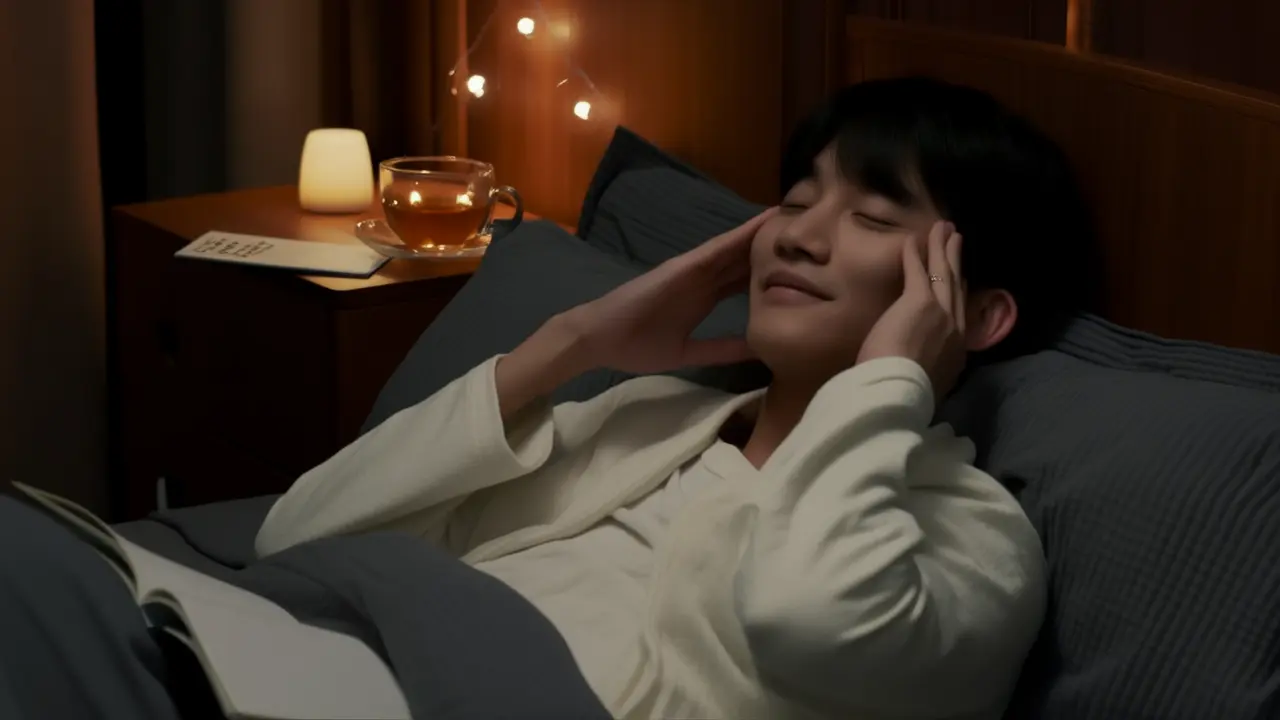
Quick Tip: Gently Massage the Forehead (Yintang)
Applicable Scenarios: 10 minutes before bedtime, or when feeling tense or restless during the day. Especially suitable for those nights when thoughts won't stop.
Specific Method:
- Find a comfortable position, sitting or lying down is fine. Close your eyes and take a deep breath.
- Use the fingertip of your index or middle finger, gently place it between the eyebrows (the Yintang point). Don't press too hard, just like gently touching a petal.
- Slowly press upward from bottom to top, drawing small circles. Do 3-5 times as a group, then change direction.
- At the same time, silently recite "relax" in your mind, letting your breathing follow the rhythm of your hand: inhale while gently pressing down, exhale while releasing.
- Repeat for 5-10 minutes until you feel the tightness in your forehead disappears, and the entire forehead feels warm and relaxed.
Pair It With a Soothing Tea
Traditional Chinese medicine emphasizes the concept of "food as medicine." Drinking a cup of warm chrysanthemum tea or lavender tea while relaxing the forehead can double the effect. Chrysanthemum clears the liver and brightens the eyes, while lavender soothes the nerves. Preparation: Take 3-5 dried chrysanthemums or a small amount of lavender, pour 80℃ hot water over them, let steep for 5 minutes. Sip slowly, feel the warm liquid flowing down your throat, and let your body warm up from the inside out.
Integrate Traditional Chinese Medicine Principles
In traditional Chinese medicine, the forehead area is also called "Yintang," a window to observe the flow of qi and blood. Long-term tension can cause stagnation of qi and blood here, affecting mental peace. By gently massaging, we can regulate the flow of qi and blood, bringing yin and yang into balance. Combined with putting away your phone before bedtime and following your body's natural rhythm (sleeping before 11 p.m.), this simple ritual can help establish a positive cycle of "relaxation → closing eyes → peaceful sleep."
Summary
Relaxing the forehead isn't magic, but it's an effective little trick verified by many people. It doesn't require any tools or cost anything, just a few minutes every night before bed to relax tense nerves. The next time you have trouble sleeping, try gently pressing your forehead with your fingers; your body will thank you.
Disclaimer: The content of this article is for reference only and does not constitute medical advice. If you have long-term sleep problems or physical discomfort, please consult a professional doctor promptly.