
Introduction: If You Can't Sleep, Try This Ancient Method
Restless and unable to fall asleep, with your mind like a movie that won't stop. Many people have such nights. Actually, a simple trick - diaphragmatic breathing - can help you relax quickly and fall asleep. It costs nothing and requires no tools. Just lie in bed and spend a few minutes, and your body and mind will calm down.
Why Does Diaphragmatic Breathing Help You Sleep?
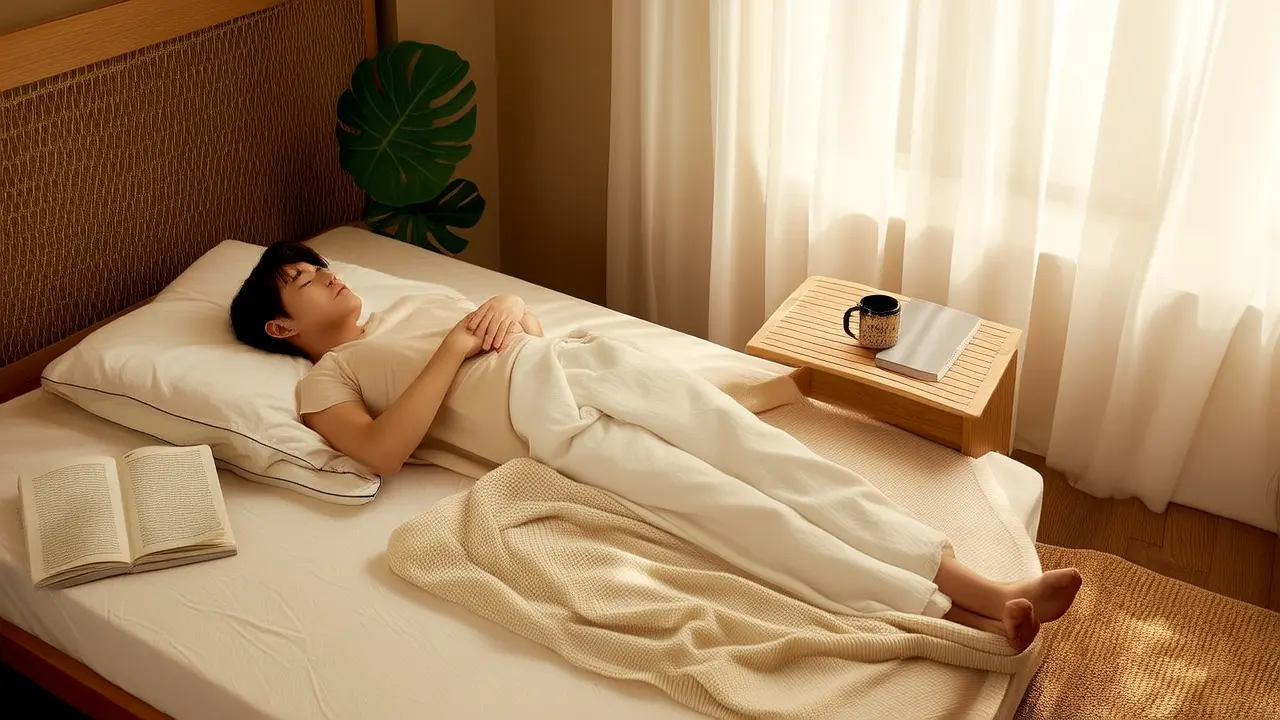
Our breathing patterns directly affect our nervous system. Shallow chest breathing keeps the body tense, while diaphragmatic breathing activates the parasympathetic nervous system by allowing slow, deep inhalations that make the diaphragm descend and the abdomen rise. In traditional Chinese health practices, this is called "regulating breath and calming the mind," which helps balance the yin and yang by regulating the flow of energy, thus making it easier to fall asleep naturally.
Instructions: Just 5 Minutes Every Night
Step One: Find a Comfortable Position
Lie flat on your back, with your legs slightly apart and your hands naturally placed on either side of your body. You can also bend your knees to make your lower back more comfortable. Close your eyes and take a few natural breaths first.
Step Two: Place Your Hands on Your Belly
Place one hand on your chest and the other just above your navel. This helps you feel the movement of your abdomen.
Step Three: Begin Diaphragmatic Breathing
Inhale slowly through your nose, feeling your belly expand like a balloon, pushing your hand upward. Keep your chest as still as possible. When you can't inhale anymore, hold your breath for one or two seconds. Then exhale slowly through your mouth, letting your belly gradually contract. The exhalation time should be twice as long as the inhalation time, for example, inhale for 4 seconds and exhale for 8 seconds.

Repeat this rhythm, doing it for 5-10 minutes each time. If you get distracted during the process, it's okay; gently bring your attention back to the movement of your belly.
When Is the Best Time to Do It?
The ideal scenario is when you're in bed, the lights are off, and you feel restless. You can also do it an hour before bedtime, paired with a cup of warm chrysanthemum tea or sour jujube seed tea (use 5 grams of sour jujube seeds, steeped in boiling water). These natural ingredients can help calm your mind and harmonize your blood and qi, but don't overdo it.
After maintaining this practice for a week, you'll find yourself falling asleep faster and waking up less during the night. Remember, diaphragmatic breathing isn't a task, but a gentle companion. Don't force it; enjoy the calm brought by each breath.
Summary: Small Habits, Big Changes

Diaphragmatic breathing is a relaxing method that follows the natural rhythm of the body, requiring no effort and posing no risks. It helps you gradually unwind from the tension of the day, returning your body and mind to a natural state of adapting to the sleep-wake cycle. Try it tonight, and you'll find that falling asleep can be so simple.
Disclaimer
The content of this article is for general informational purposes only and should not be considered professional medical advice. If you have long-term sleep problems or respiratory diseases, please consult a doctor. Methods vary from person to person, so maintain patience and kindness towards your body.