
Introduction
Spent the whole day sitting, feeling stiff and sore in your back and waist? Don't worry, no need to go to the gym or buy any equipment. Today, I'll teach you a simple back and waist relaxation technique that can be done at home - the gentle spinal twist on a chair. This exercise comes from chair yoga and traditional health wisdom, it's gentle and easy for middle-aged and elderly people to master. Just a chair and a few minutes, and it can help you loosen up your joints, unblock meridians, and make your back and waist feel comfortable.
Applicable Issues

This movement mainly targets: stiffness in the lower back caused by long periods of hunching over a desk or phone, soreness in the lower back, and inflexibility in the spine. It is also suitable for those who want to improve posture issues like hunched back and rounded shoulders. It does not treat any diseases, but rather helps the body regain natural flexibility and balance through gentle stretching and rotation.
Technique Details: Seated Spinal Twist
Preparation
Find a sturdy chair, sit on the front part of the chair, feet flat on the ground, shoulder-width apart. Keep your back naturally straight, place your hands on your knees. Take two or three deep breaths to let your shoulders relax and drop down.
Step 1: Inhale to Prepare
Gently inhale, feeling the air fill your chest cavity, while extending your arms out to the sides with palms facing forward. Imagine your spine being stretched upward.
Step 2: Exhale and Twist
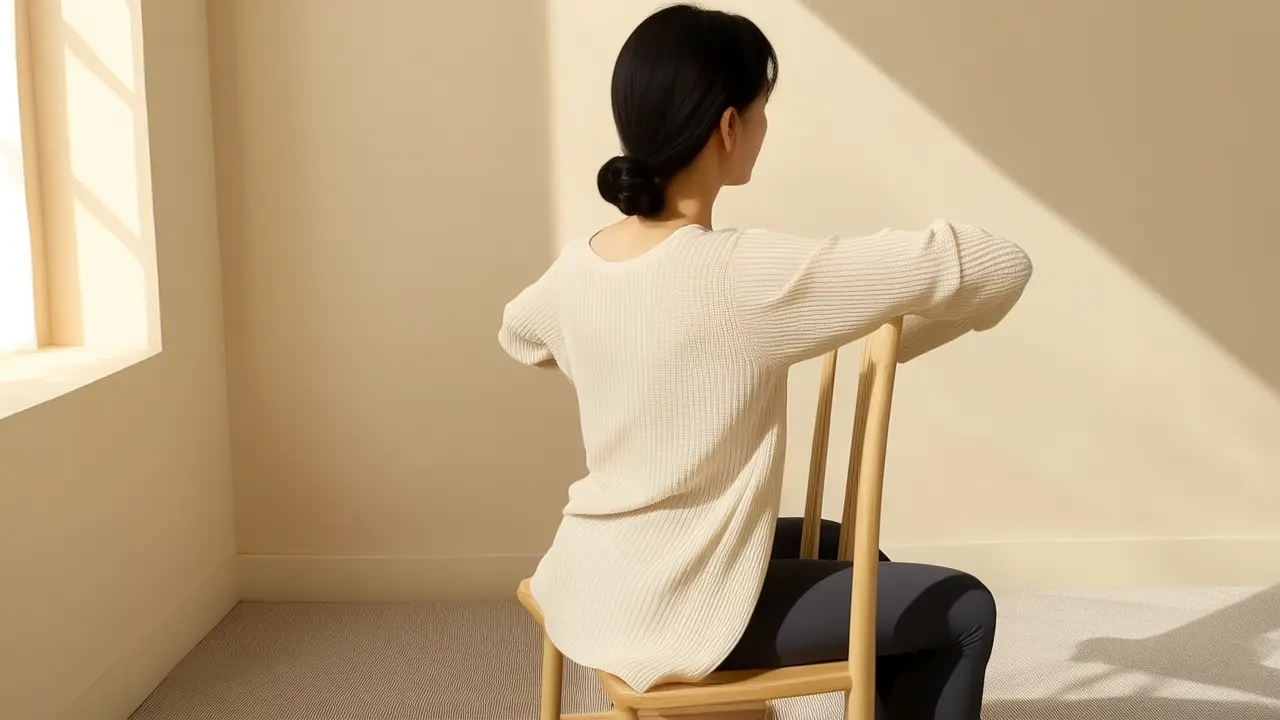
Gently exhale and slowly turn your upper body to the right. Place your right hand gently on the top of the chair back, and your left hand on the outer side of your thigh or knee. Look over your right shoulder, but don't force it too much. Feel the rotation and stretching from your lower back to your shoulder. Hold for 3-5 breaths, extending a little more with each inhalation and going deeper with each exhalation.
Step 3: Return to Center, Switch Side
Inhale and slowly turn your body back to the front, bringing your hands back to your knees. Then switch to the left side and repeat the same movement. Do 3-5 times on each side as a set, and it is recommended to do 2-3 sets per day.
Benefits for Body Improvement
- Loosen Joints and Bones: Gentle twisting allows the lumbar and thoracic vertebrae to move step by step, relieving stiffness and increasing spinal flexibility.
- Unblock Meridians: According to traditional Chinese medicine, twisting can stimulate the bladder meridian and the governing vessel on the back, promoting blood circulation and helping to eliminate "cold energy" accumulated from prolonged sitting.
- Regulate Qi and Blood Circulation: Combined with deep and long breathing, it expands the lungs and promotes overall circulation. When the qi and blood flow smoothly, the back and waist naturally become warm and comfortable.
- Follow Nature, Balance Movement and Stillness: The movement is slow, with breathing coordination, similar to Tai Chi. It doesn't pursue range of motion, but only comfort. This reflects the TCM concept of combining movement and stillness for health care.
Tip
If your back and waist are particularly tight, don't force yourself to twist all the way, just do it to a comfortable extent. If you have neck discomfort, you can just look straight ahead without turning your head. Do it several times when you have time, and it feels like a gentle massage for your spine.
Summary
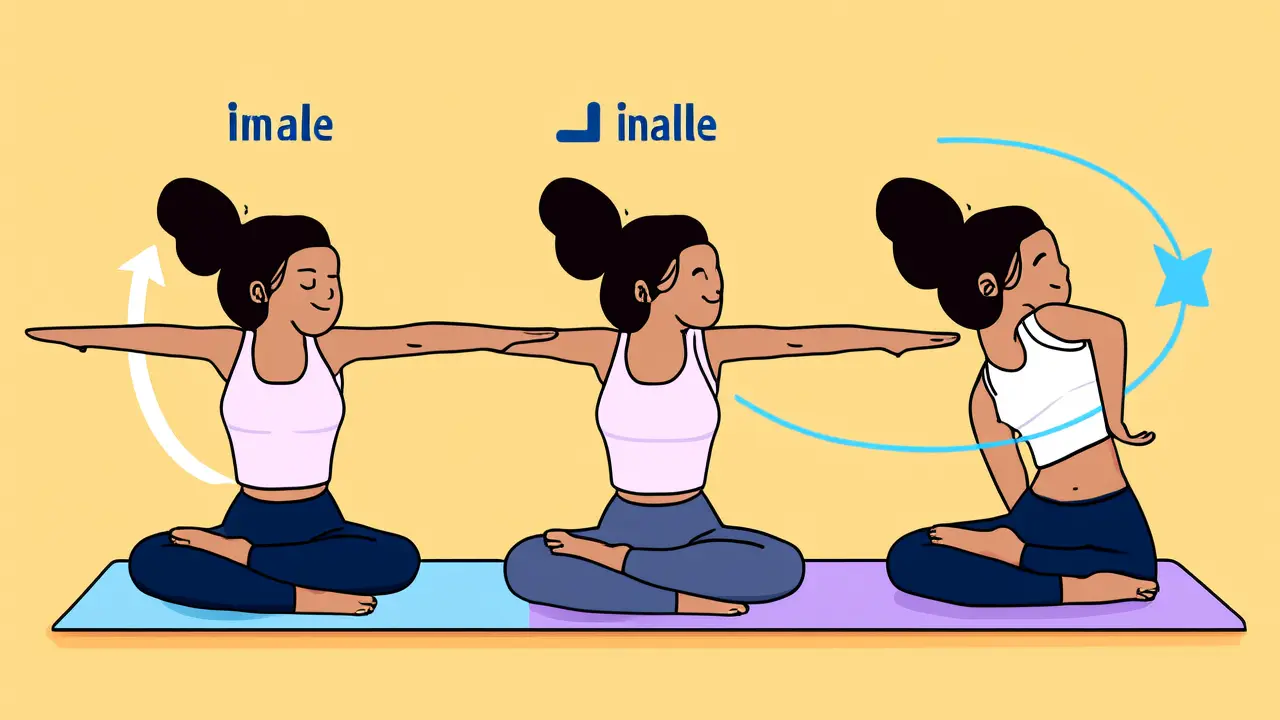
Although this chair twist exercise is simple, consistent practice can make your back and waist more flexible, promote blood circulation, and improve your posture. It can be done at home without any equipment, safe and effective. Don't forget to drink a cup of warm water before and after exercising, which helps your body better circulate qi and blood.
Disclaimer
The content of this article is for sharing health knowledge only and does not constitute any medical diagnosis or treatment advice. Please perform all movements within your own physical capacity. If you have acute pain, herniated disc, or other serious conditions, please consult a professional doctor first. The author will not be held responsible for any accidents caused by improper practice.